
My Home, No Home
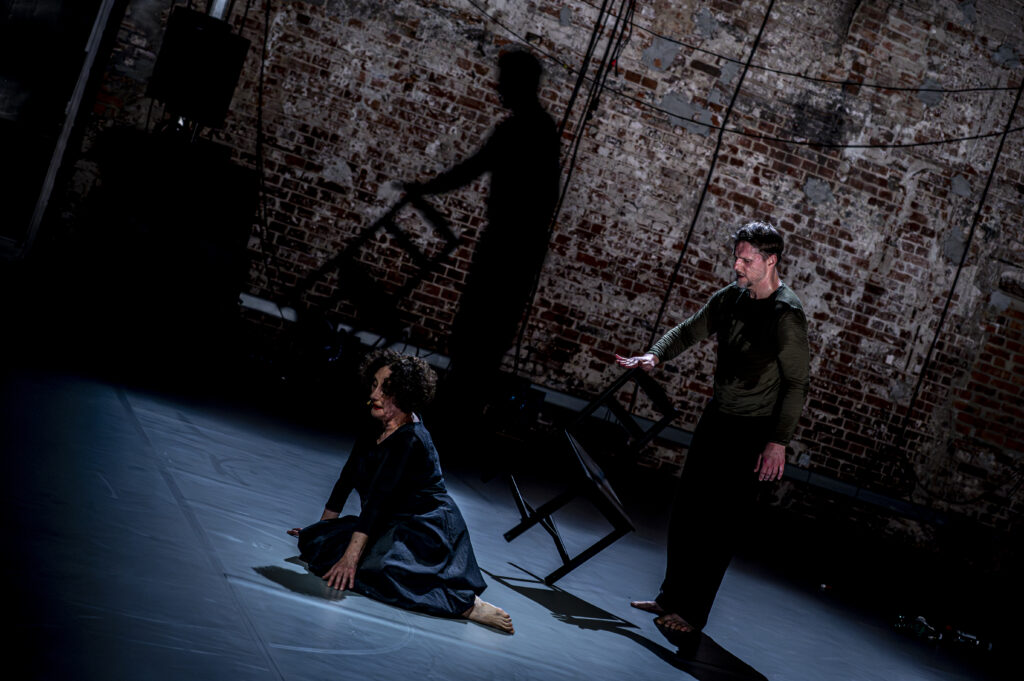
Dictionaries define ‘home’ (Spanish hogar) as ‘a building or a place of residence’ as well as ‘a family, a group of related people living together’. While the first definition refers to a physical structure, the second focuses on those who inhabit it. One is concerned with form (a building), the other with content (a building’s contents). In a broader, metaphorical sense, the idea of ‘home’ is tied up with emotions. Some notions directly associated with home include community, security, refuge, faith, shelter, love and trust between people living under one roof.
For Spanish dancer Nazareth Panadero and German artist Michael Strecker, Tanztheater Wuppertal not only served as the dance company’s home, the building where they worked together, but was a true home, cared for by Pina Bausch and permeated with her talent and sensitivity. For many years, Pina was in charge of the company’s life-in-dance. After her death in 2009, the inexorable passage of time necessitated change, but Panadero and Strecker, who had been but a little part of the legendary group, continued to work together.
In 2022, they co-created the diptych Vive y deja vivir (Live and Let Live), articulating their emotions about their former life. Now they return to revive the spirit of their lost home and to keep it alive. ‘Pina Bausch brought us together in our work. The past is our home, but we no longer inhabit it’, they say. When they worked with Pina Bausch in Wuppertal, they went to her with their joint idea, to which she responded: ‘Yes…
but then what?’ My Home, No Home seeks to answer this question many years later. Bausch taught them how to use questions to structure theatre actions, which continues to be their creative method. While developing the piece, they ask themselves questions about what was happening in and around them when they had lived in Wuppertal. They thought about the past, the present and the future. About their dreams, fears, childhood, maturity. About small things that later turned out to be big things. But, most of all, about home: what it meant – and still means – in their lives. They translated their answers into gestures, movements, words, text, music and stories, and then used these elements – some of which were as fleeting as dance – to build a home: My Home, No Home.
[Omar Khan]
Trailer
Artist's/band's artistic biography
Nazareth Panadero (born in 1955 in Madrid) is one of the most acclaimed contemporary dance artists, a key figure in Pina Bausch’s Tanztheater Wuppertal, which she joined in 1979 and where she worked for over four decades. Trained in classical dance in Madrid and Zaragoza, Nazareth began her professional career in France before gaining international acclaim in Germany. Known for her exceptional stage presence and unique sense of humour, her expressive and precise mode of work is compared to that of Buster Keaton’s. Her signature dance performance credits include Café Müller, Palermo Palermo, Nur Du, Vollmond and Sweet Mambo. She has also appeared in such celebrated films as Pedro Almodóvar’s Talk to Her and Wim Wenders’ documentary Pina. In 2025, Nazareth performed in Alain Oyen’s Antigone. She has garnered a raft of awards, including the Andorra Award, the Spanish National Dance Award and the Gold Medal for Merit in the Fine Arts, which attest to her strong position on the international cultural scene.
Michael Strecker (born in 1966 in Hanover) is a celebrated German dancer and choreographer, known for his long–standing association with Pina Bausch’s Tanztheater Wuppertal, which he joined in 1997. Michael began his dance training late, at the age of 17. His first professional engagement was with the Städtische Bühnen Osnabrück. Then, for seven years, he was a member of Dansgroep Krisztina de Châtel in Amsterdam, where he honed his style marked by physical precision and versatility. At Tanztheater Wuppertal, Strecker performed in many of Pina Bausch’s productions and then in successive productions of the theatre’s artistic directors. He has appeared in Wim Wenders’ Pina and Pedro Almodóvar’s Talk to Her. Michael has developed a successful artistic collaboration with Nazareth Panadero. Together, they have created, among others, the piece Ohlalá (2012) and several choreographies for the UNDERGROUND programme at Tanztheater Wuppertal, including Clandestine (2013), Paar mit Hund (2016) and Two Die For (kein Krimi) (2019). In 2022, they presented Vive y deja vivir (Live and Let Live), a co-production combining Two Die For and Mañana temprano.
- Choreography
- Lighting Design
- Costumes
- Production