
Polish Dance Platform as the Witness to Change(1)
Anna Królica
The history of Polish Dance Platform is in fact the history of the last twenty-five years of Polish dance. Emphatic as that sounds, the inaugural Platform was held in 2003, and eight editions have been completed to date. We are currently on the eve of the ninth Platform, to be held in Wrocław. A fair bit of time has passed – and a crucial bit it was, too, instrumental in the changes to the Polish dance scene (both institutional and independent.) One thing seems clear: each Platform has become ingrained in the Polish dance landscape as a significant event and steadfast reference point.
The emergence of dance platforms in the Polish dance world undoubtedly marked the advent of a new way of thinking about, and new cultural politics of, choreography and dance. Underlying this gesture of seizing the instruments and strategies known from elsewhere and transferring them to Poland was the desire to join the club of countries with a prosperous dance politics. All this was not unlike doing one’s homework (this particular lesson would be called ‘catching up with [western] Europe’). Without a doubt, the concept of Platform has propelled Poland’s dance circles to a more professionalized, more institutional level: all thanks to a recognizable set of rules, which included ensuring that Polish artists gain visibility abroad.(2)
The next step entailed fitting Polish ensembles, festivals and independent choreographers into international art networks and circuits. A further goal was to set new trends in European dance theatres. One thing is certain: with each new Platform, we have woven ourselves ever deeper into the fabric of the international dance community.
As far back as in the early twentieth century (and, in some cases, even earlier than that) Polish dance artists had had opportunities to present their work to a wider audience, including critics and art patrons. These presentations occurred during what had effectively been an international biennale of art, where works were showcased, and ideas exchanged and discussed, ensuring that art and artworks became part of a circuit; and for artists, joining that circuit had always been a vital part of their practice.
The international dance scene came up with their own version of this kind of ‘biennale’: none other than the (for want of a better word) ‘national’ dance platforms where issues such as one’s ethnicity, nationality and workplace cannot but be seen in a wider context, seen with greater understanding – and hence approached in a loving, reflective manner.
How do we entice international curators, festival directors, programmers, journalists and critics to come here to see Polish dance? And not only that: how do we make them visit Poland, be blown away and not return home until they have promised to invite Polish artists to perform at their events? How does one go about organizing and programming an event of this kind, the (much anticipated) success part and parcel of its script?
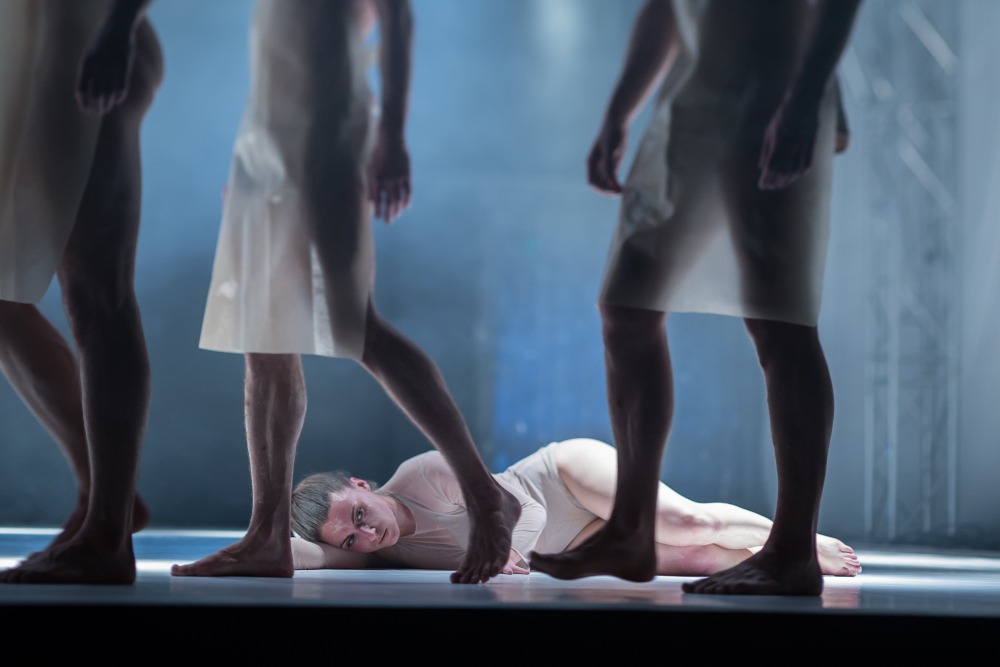
Teatr Rozbark, “Zagubieni w skórze”, photo Jakub Wittchen
Does success inevitably take a while?
In the late 1990s landscape of Polish dance, there was a dearth of entities and institutions that would help artists grow (in the broad sense of the term). One way of changing that was to look to the West, and its tried and tested forms of systemic support: long-term grants for artists, residency programmes, surveys, renting dance studios at preferential rates, etc. These solutions enabled performers to produce new work (rather than frantically over-produce it whenever grants became available) and ensured that existing pieces were being shown and distributed, both in Poland and abroad. This prompted the question of which institution should now seize this ‘bundle’ of good practices and great advice; in other words, who was to look after the art of dance? One candidate was the Adam Mickiewicz Institute, whose task is to promote Polish arts around the world. By this point, the idea of a separate institution, focused exclusively on dance, had already begun to germinate, and, in 2010, the Institute of Music and Dance (renamed the National Institute of Music and Dance in 2021) was founded. And yet, in the early 2000s, contemporary dance was still on a quest for its identity, and more important, its symbolic place, systemic funding and support.
Eventually, members of the (now defunct, active between 1995 and 2005) Independent Dancers Association (Stowarzyszenie Niezależnych Tancerzy), with Edyta Kozak as chair, organized Poland’s first dance platform ‘taniec.pl’, as part of the Body/Mind Third International Contemporary Dance Festival. Thus, in 2003, we made the first tentative attempt to include Polish dance in the international dance network. In other words, creating Platform was very much a grassroots idea.(3)
It quickly became clear that this system of showing our work to each other, and exchanging know-how and contacts, played a vital role in giving both Polish dance and its international standing a boost. If Polish dance was to grow more rapidly, it was essential that people from different walks of art put their heads together. Inviting foreign productions to Polish festivals, organizing reviews, looking for partnership opportunities was but one aspect of working together (albeit a vital one.) For Polish dance artists, the opportunity to perform abroad was an indication that audiences were interested in their work; it gave them a sense that they belonged in the international dance community, and embodied the longed-for visibility and recognizability any creative so sorely needs. What mechanisms and strategies need to be put in place to make information circulate, and to prompt exchanges between dancing monads in Poland, France, Germany, the United Kingdom and the United States?
For years now, it has been common knowledge that talent, a sound education and an independent creative practice are not, in themselves, enough to shine on the Polish or international dance scene. One needs to find a way into the world of producers, curators and festival directors from abroad (assuming, of course, that the individual in question has already found their feet on the Polish dance scene), and find a way to get them interested, to stand out from the crowd.
Polish Dance Platform offers artists space where they can showcase their work and be seen; it enables them to share (the gist of) what they are working on. In addition, it provides opportunities for meeting other members of the dance community in the flesh; gives performers the attention they long for; facilitates the shift from a formal to informal mode of communication, enables artists to come into contact with one another and, in the longer term, to establish strong professional relationships.
After the first Platform (in Warsaw), international demand for Polish dance soared, but a proper funding system (and, most of all, an organizer) was yet to be in place. The situation took a turn for the better when Joanna Leśnierowska, curator of the Stary Browar Nowy Taniec programme, successfully launched a new dance venue in Poznań, generously funded by the entrepreneur and arts patron Grażyna Kulczyk. It was at that point that the idea of Platform re-emerged. Kulczyk’s Art Stations Foundation joined forces with the ZAMEK Culture Centre in Poznań and, in 2008, curators from abroad were invited to the second Polish Dance Platform, in Poznań. The same team was responsible for organizing the third Platform in 2010. For the fourth, 2012 edition, organizers were joined by the Music and Dance Institute, with Joanna Szymajda (deputy director and head of the Dance Department) at the helm.
As time went by, Platform became a fixture of the National Institute of Music and Dance programme (and, as a result, of the dance ecosystem) – all thanks to systemic institutional support. At present, dance artists look forward to the next Platform as a major event in their professional lives.
2014 was the first year when, following the example of its Italian and German counterparts, Platform was no longer confined to one place, but literally ‘hit the road’ as a mobile event, with each edition hosted by a different city. In 2014, Platform arrived in Lublin, forming a partnership with the local Lublin Dance Theatre – Centre for Culture. The next Platform was held in 2017 in Bytom, in collaboration with the ROZBARK Bytom Dance and Movement Theatre. Two years later, in 2019, Platform was hosted by Gdańsk and organized by an alliance of the (National) Institute of Music and Dance, Dada von Bzdülow Theatre, the Polka dot Foundation and the Adam Mickiewicz Institute. In 2024, Platform was held in Łódź, organized by the National Institute of Music and Dance and the Materia Foundation. Now, in 2026, the time has come for Wrocław, where Platform will be organized by the National Institute of Music and Dance’s local partner, the Grotowski Institute.
Since each Platform is held in a different location, each new edition gives participants the opportunity to learn more about a city’s local community and its potential: to take a peek at local theatres, dance studios, and get to know the local dance scene. The power of dance lies, among other things, in creating communities and establishing relationships between them, and building bridges and networks which will become the foundations of new projects and collaborations.
The sticking points: the panels, the criteria, the open call, the results
Each Platform is curated by a different group of people. Being on the art panel is a demanding task, in that the panel’s choices translate into the programme: some productions get noticed and some are (at least temporarily) ignored.
Despite the open call and Platform’s contest-like nature, other considerations are far more important than the manner in which productions compete. Both the dynamics of the selection process and its result are symbolic. What actually matters is the effective communication of anything Platform-related: the rules should be clear to everyone involved. So far, Platform’s art panels have followed a variety of formats. The quest for the best (or at least a better) system continues. In practice, heated debates seem inevitable, and that can only mean one thing: the panel’s choices matter, they cause a stir, provoke a response and engage members of the dance community.
Tensions reach their peak when the panel announce their decision: in other words, they announce that Platform’s main programme. Often, this divides opinion within the community. The over- or under-representation of artists, groups and productions sparks a debate.
In this context, we can take heart in the fact that polemics and debate are part and parcel of the panel’s work: there is no getting away from that. This is because that work is rooted in their subjective opinions and tastes. The stakes are high: it is either being seen or being pushed to the sidelines – temporarily at least, until the next Platform. At the same time, were one to argue in favour of introducing more objective criteria, one could highlight the fact that, despite the varying makeup of the art panels, most performers’ names have recurred over the two decades. The panel’s choices are therefore consistent and coherent.
A crucial question for dance artists is whether the panel have experienced their performance live or only in the form of an audiovisual recording, and what their selection criteria were. Were the panel on the lookout for well-made productions or experimental ones; did they set out to choose the most interesting ones, or were their selection criteria different still? The panel does not need to set out to formulate a manifesto on the unique characteristics of Polish dance (though I, for one, find the prospect of redefining dance enticing).
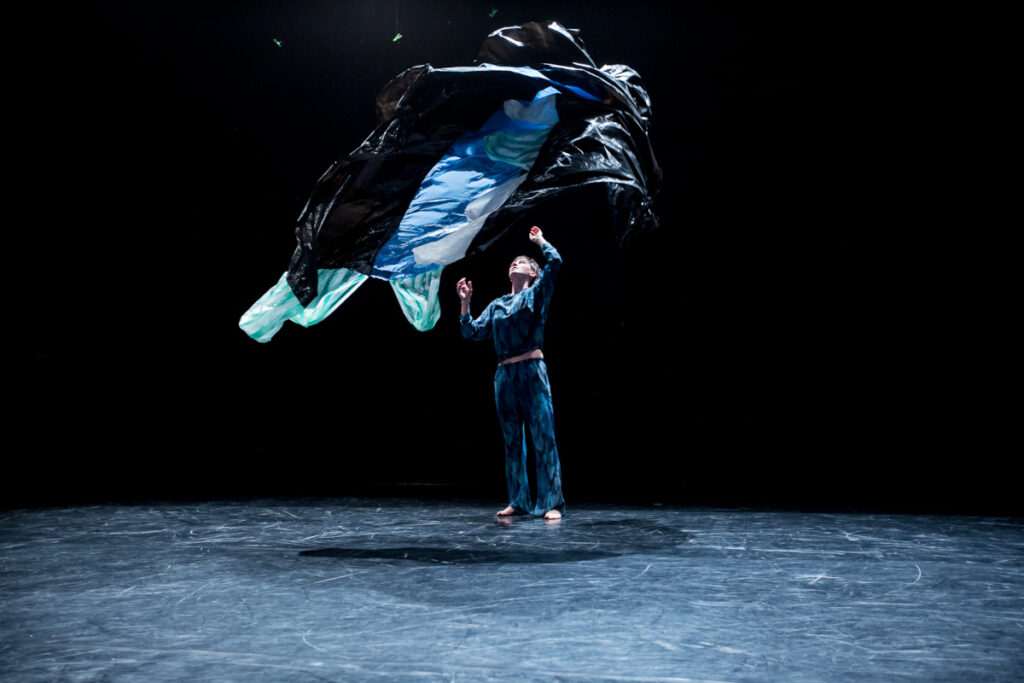
Katarzyna Chmielewska i Teatr Dada von Bzdülöw “Why Don’t You Like Sadness?”, photo Jakub Wittchen
This year, the panel (who have already concluded their work) comprised an international group of curators, festival directors and choreographers. For the first time in Polish Dance Platform history, the panel did not include an expert from Poland. Obviously, as Poland has long ceased to be a desert island, members of the current panel are familiar with the names of a number of Polish performers. They are not, however, involved in local collaborations and projects – nor, for that matter, are they entangled in local animosities (although personal affinities, and some history of working together, are still there.) I doubt that finding experts who have no shared history with performers is feasible at all. The choice of an all-international jury implies greater transparency, and seems to suggest that the tastes of a foreign panel will translate into a Platform programme fascinating enough for international guests that it results in invitations for Polish performers to work abroad.
The 2017 Poznań edition of Platform comes to mind in this context: the three-strong panel comprised Anna Królica (myself), critic Jacek Kopciński and the Belgian curator Carine Meulders, who at the time worked at Antwerp’s wpZimmer residency space for artists.
Over the years, the largest Platform panel comprised around ten people, but the usual size is three, five or eight. Artists are often keen for the panel to see their work live, rather than in the form of a recording. However, uncertainty as to whether a camera could convey all of the production’s qualities is not the only challenge when faced with group or international panels. In previous editions, an excellent production would occasionally be excluded from the selection process because it could not be presented live while the panel was in session. The issues of volatile distribution of existing productions and producing new shows in a sustainable manner (in the broadest sense of the term) are reflected in the debates held during Platform. In addition, the fact that a production is seen only by some members of the panel flies in the face of the idea of a group jury whose whole point is diversity, representing different styles and genres of dance – still, it is usually not practicable for all members of the panel to be present in the flesh. In addition, sitting on the panel entails supporting local experts, boosting their stature and shaping the community – in other words, it might be a good idea to think again about excluding Polish experts from the panel.
The Platform chronicle
2003, Warsaw: Working at the grassroots level
The first Polish Dance Platform was organized by the Independent Dancers Association as part of the Body/Mind festival managed by Edyta Kozak, under the name ‘taniec.pl’. Thus, the Polish world of dance met international standards of presentation. Around a dozen productions were selected: Trzy bretonki [Three Bretons] by Bretoncaffé Theatre / Anna Godowska; Strzałka czasu [Time’s Little Arrow] by Rafał Dziemidok and Mirosław Zbrojewicz; Radio East by Helena Gołąb and Matiji Ferlin; fragment by Katarzyna Chmielewska; More than you expect by Anna Haracz; Akrobaci [Acrobats] by Hanna Strzemiecka and Lublin Dance Theatre; Takie proste [So simple] by Teatr Otwartej Kreacji and Beata Owczarek and Janusz Skubaczkowski; Gra 1. Czas [Game I: Time] by Atelier Polish Dance Theatre and Iwona Pasińska; SEI by Atelier Polish Dance Theatre and Anna Kołek; Magnolia by Dada von Bzdülöw Theatre; waran@las.piniowy by Cynada Theatre and Bożena Eltermann and Marek Kakareko; made.inc by Edyta Kozak; Plik 01 [File 01] by Mirosław Kowalczyk; and finally, Uwaga [Caution] by Magda Reiter. In addition, night, day by Maria Stokłosa and Instinct by Anna Piotrowska were shown or screened.
Showcasing their work and strengthening their bond with colleagues aside, Polish dancers had the opportunity to audition for foreign ensembles, and build relationships and international collaborations. Auditions were held for the Institute of Dance Arts in Linz and the x.IDA ensemble, among other institutions; the international TransDance Europe network, whose aim is to provide support to emerging European artists, also came together during the 2003 Platform. It was during that Warsaw gathering that Dada von Bzdülow Theatre was chosen to take part in the 2004–2006 TransDance Europe tour; and, in 2004, choreographer and dancer Helena Gołąb was offered a residency at the TanzQuartier in Vienna.
2008, Poznań: Going once
The 2008 Platform, programmed by curator Adam Kamiński (Wrocław), choreographer and producer Edyta Kozak, and curator and researcher Anna Królica, as well as local collaborators Joanna Leśnierowska (Stary Browar Art Center[4]) and Anna Hryniewiecka (ZAMEK Culture Centre), proved to be a challenge. It was at once independent and embedded in institutions, bringing together experts from different parts of the country to ensure the choices they made would be decentralized, and the outlook on dance in different regions as broad as possible. The then Platform panel had been exceptionally articulate about their goals:
“[…]The Polish Dance Platform panel have decided to follow the model of a platform focused on showcasing the work of emerging artists (‘emerging’ is defined primarily in terms of how long they have been on the choreography scene) who are yet to make a name for themselves on the international dance scene, or are relatively unknown there. (Polish Dance Platform 2008, p.9)”
Platform’s mission was to ‘bring the map of Polish dance up to date, meaning both to evaluate existing creative sources and identify potential new ones’ (Polish Dance Platform Panel 2008, p. 9).
The result of all this was an intriguing three-day programme featuring two debates: ‘Unique to Poland? How Dance in Poland Changed’, where audiences could meet the Platform panel, and ‘Splendid Isolation? Dance vs other Arts in Polish Society’. This panel comprised academics Dariusz Kosiński and Waldemar Kuligowski, choreographer Leszek Bzdyl and curator Stanisław Ruksza. Both were moderated by critic Witold Mrozek, who at the time worked for the nowytaniec.pl website.
The presentation segment featured long-established ensembles: the Polish Dance Theatre – Poznań Ballet, Lublin Dance Theatre, Dada von Bzdülow Theatre, Occasion Theatre (later renamed Sopot Dance Theatre), and an onscreen presentation of 2moreless, a Koncentrat Group production.
Platform’s main programme in 2008 featured the following productions: Akcja [Action] by Good Girl Killer; Tańcząc z wrogiem [Dancing with the Enemy] by Renata Piotrowska and Towarzystwo Prze-twórcze; Lang by Tomasz Bazan; Vacuum by Maria Stokłosa; Waiting by Mikołaj Mikołajczyk; Close-up by Radosław Hewelt; Inch 1.5 by Anita Wach; Jak wam się podobam? [As you like me?] by Dominika Knapik; enter by Ewa Bańkowska; Gra:my x3 by Iwona Pasińska; Nic [Nothing] by Towarzystwo Gimnastyczne; Tańcząc Sarę Kane[5] [Dancing Sarah Kane] by Bretoncaffé Theatre; Królik, śmierć i konkurs ujeżdżania [Rabbit, Death and an Equestrian Competition] by Rafał Dziemidok; and Tańce których nikt nazwać nie chciał [Types of dance no one wated to name] by Arka Dance Theatre.
As I argued in the context piece in the Platform catalogue:
“Bretoncaffé Theatre, Grupa Koncentrat, Arka Dance Theatre and Towarzystwo Gimnastyczne are currently among the most intriguing fixtures of Polish dance; what they have in common is a heightened interest in form, taking creative work and ‘self in art’ with a pinch of salt, irony, an intellectual (and, occasionally, conceptual) slant. […] Let that in itself be the herald of a new chapter in Polish dance […]. (Królica 2008, p. 8)”
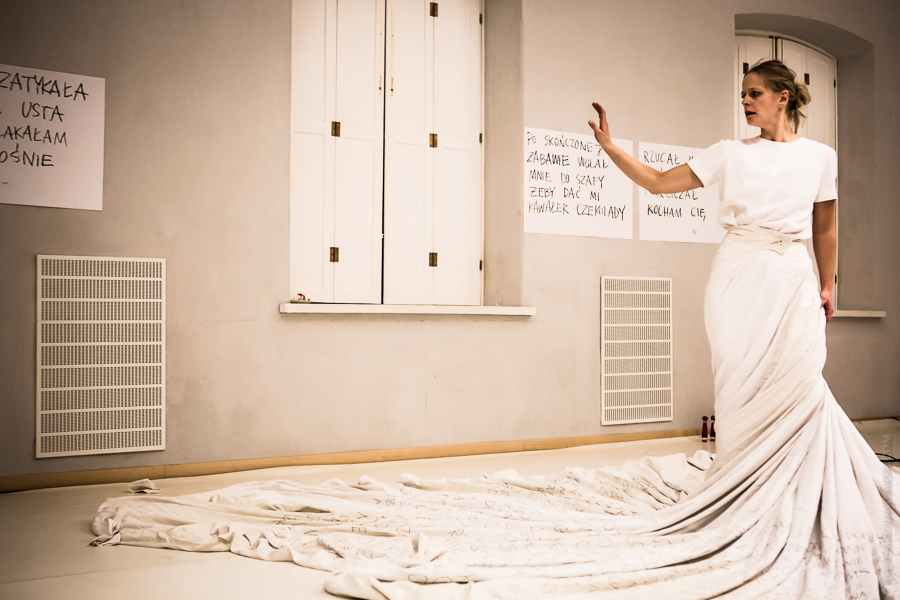
Aurora Lubos “Akty”, photo Honorata Martin
At the time, we believed Polish dance needed to come with lots of introduction and context for foreign audiences to fully appreciate the productions selected for Platform.
The shift from the era of dance companies towards individual performers, new languages of dance expression and greater diversity, were all evident in the Platform programme. Crucially, each company gradually arrived at its own aesthetics, but the decision to have their name reference dance theatre as a genre established a particular reception framework. Parallel to that, a sizeable new group was beginning to emerge: young choreographers who had collaborated with Stary Browar as part of the Solo Projekt residency, many of whom had trained abroad and some of whom had either ballet training or had learned to dance informally in Poland. It was within this group that an entirely new choreographic language emerged, known initially as ‘new dance’.
With hindsight, it is clear that, at the time, independent Polish dance comprised a small community. Around sixty applications were received in response to the open call before the second Platform. But change was already in the air. A stir? A performative turn? How does one describe this moment of transition? Without a doubt, new ideas had begun to germinate. So perhaps the term ‘new dance’ was not so inaccurate after all?
By that point, a few centres had established themselves on the Polish art scene, including Gdańsk, Poznań, Lublin, Bytom, Kalisz, Warsaw and Kraków.
What set the dance scene in Gdańsk (and neighbouring Sopot and Gdynia) apart was its diversity. Independent dance ensembles abounded in this region, and the abundance was reflected during the 2008 Platform, which featured presentations by Occasion Theatre (subsequently renamed Sopot Dance Theatre) and Dada von Bzdülow Theatre (known as Dada); and, as part of the main programme, Good Girl Killer, an independent ensemble featuring Magda Jędra, Anna Steller, Krzysztof Leon Dziemaszkiewicz and Grzegorz Walizerowicz. Radek Hewelt also had links to the region, having started out at Dada von Bzdülow. The memory of Wojciech Misiuro’s Teatr Ekspresji was still very much alive at the time (Bożena Eltermann, Leszek Bzdyl, Jacek Krawczyk, Krzysztof Leon Dziemaszkiewicz were among its collaborators); the Dada von Bzdülow Theatre generation was asserting itself (Katarzyna Chmielewska, Leszek Bzdyl), as was Sopot Dance Theatre (with its frontrunners, Joanna Czajkowska and Jacek Krawczyk), Cynada Theatre, Leon Dziemaszkiewicz’s Good Girl Killer, and others.
Similarly, Kraków had no shortage of dance personalities, theatres and ensembles. Suffice it to mention Jacek Tomasik, founder of the Kontrast dance theatre. During the Poznań Platform, Kraków dance circles were represented by Dominika Knapik.
Pre-eminent personalities and independent performers aside, Warsaw boasted two major festivals: Rozdroże, curated by Janusz Marek, who invited Pina Bausch, Helena Waldmann, Suzanne Linke, Compagnie Michèle Noiret, Compagnie Mossoux-Bontè and others to subsequent editions; and the Body/Mind festival, curated by Edyta Kozak and showcasing the latest, avant-garde offerings of Jérôme Bel, Xavier le Roy and Thomas Lehmann. In terms of repertoire, the affinity was strongest between Platform and the Body/Mind festival. Ensembles and performers overlapping between the two included: Grupa Koncentrat (Rafał Dziemidok, Anka Jankowska), Anita Wach (who previously worked with the Silesian Dance Theatre), Maria Stokłosa (who trained abroad), Bretoncaffé Theatre (Anka Godowska, Sławek Krawczyński, Anita Wach) and Renata Piotrowska.
Lublin is where Lublin Dance Theatre developed: initially with Hanna Strzemiecka at the helm, before Ryszard Kalinowski took over with her blessing. Tomasz Bazan, a member of the butoh community, and later director of the Maat Festival, also took part in the second Platform.
Bytom was another major dance centre: the Silesian Dance Theatre (with Jacek Łumiński at the helm) and the International Contemporary Dance Conference (organized by the Theatre) had been developing for years.
Kalisz was yet another significant spot on the symbolic map of Polish dance: Witold Jurewicz and the dancers trained by him dominated the local scene (hence Kalisz was known as a breeding ground for fresh talent).
Poznań is another (and obvious) major dance city, with the Polish Dance Theatre – Poznań Ballet (led by Ewa Wycichowska and Conrad Drzewiecki before her), Joanna Leśnierowska’s Stary Browar Nowy Taniec and the ZAMEK Culture Centre: all these institutions were open to manifestations of dance, while offering an interdisciplinary programme. The 2008 Platform featured a number of members of the Poznań community: Towarzystwo Gimnastyczne, Iwona Pasińska and Mikołaj Mikołajczyk.
The Wrocław circles were represented by Jacek Gębura’s Arka Dance Theatre, joined on stage by Piotr Skalski and Radosław Stępniak. Arka worked with many artists: Anna Krych and Tomek Leszczyński were frequent collaborators. In 2008, Ewa Bańkowska, who had strong links to the Austrian dance scene, began her own collaboration with Arka.
2010, Poznań: Going twice
On this occasion, the Platform programme was put together by a panel of three experts: dance critic Jadwiga Majewska, Janusz Marek (who curated the performance programme at the Ujazdowski Castle Centre for Contemporary Art in Warsaw) and Tadeusz Kornaś of the Jagiellonian University in Kraków. The Platform catalogue described it as showcasing the most exciting Polish dance productions, completed during the previous two years (starting with 2008): a major change compared with the narrative proposed by the previous panel. Judging from this description, what was one to expect? Nothing but positive developments and informed choices. The Polish dance scene had indeed begun to develop more quickly; for one thing, it began to grow, and secondly, a joyous tone could be heard in the Platform debates, as culture minister Bogdan Zdrojewski had recently established the Institute of Music and Dance.
Accordingly, the Platform programme featured a talk titled ‘Music and Dance Institute and what next?’.
The programming of each Platform is guided by a simple principle: while the main programme is meant to attract the bulk of the attention and spark a heated debate, the accompanying programme is there to broaden the context. The latter programme includes debates, presentations of the local dance scene, introducing additional narratives around Polish dance – and any other theme that would introduce a different context.
The third Platform’s main programme featured: Renata Piotrowska and Towarzystwo Prze-Twórcze with Unknown (they made their return to Platform, having performed in the previous edition); Good Girl Killer and their Delia; Dominika Knapik (by that time, as a choreographer) with Harakiri Farmers,[1] in collaboration with Ana Brzezińska; Tomasz Bazan and Maat Project Theatre with Wake up in the evening; and Bretoncaffé Theatre with Topinambur.
Wojciech Kaproń (who at the time worked with Lublin Dance Theatre) presented Kosmos as part of the solo programme, garnering praise as both a performer and choreographer. Janusz Orlik was another highlight of the solo programme, his Live on stage an ironic testament to the Polish sense of humour.
Kraków dance circles got much wider representation this time round: apart from We are oh so lucky by Harakiri Farmers and Ana Brzezińska, Barbara Bujakowska & Marcin Janus presented their 3D-ance solo. Iwona Olszowska showed Spacer and Małgorzata Haduch / Unfinished Company presented their solo Zona Segura.
Ula Zerek joined Platform from Gdańsk, presenting her lyrical solo Humuli Lupuli. Dada von Bzdülow Theatre performed Czerwona trawa [Red grass] inspired by Boris Vian’s prose.
Anna Piotrowska & mufmi were the sole representatives of Warsaw dance circles, with a performance of fall(ing) ceil(ing).
As part of the accompanying programme, Polish dancers performed Happy, a treatise on the Polish national character, supervised choreographically by Nigel Charnock. The production became a major event, universally recognized by critics as the highlight of 2009.[1] A number of top Polish dancers appeared in the show,[2] supervised by Charock, once a member of the legendary DV8 Physical Theatre group. The production was shown as part of Polska! Year, a celebration of Polish arts and culture in the UK.
Improvisation became the unofficial running theme of Platform in 2010, a tendency reinforced by the presence of Nigel Charnock, Iwona Olszowska, Ania Piotrowska, Małgorzata Haduch, Renata Piotrowska and the Melba Collective. One could argue that both Polish and foreign participants, as well as the Platform guests, witnessed, if not a revolution (after all, all changes occur in their own time), then certainly a shift in dance aesthetics and the means by which performers are selected. As part of the accompanying programme, the Polish Dance Theatre presented two choreographies: the atmospheric, Israeli Autumn / Nuembir by Jacek Przybyłowicz and Wiosna Effatha by Ewa Wyichowska. This part of the programme enabled the organizers to strike a balance between presenting the resources of Polish dance and its institutional power: large ensembles presenting their best shows were juxtaposed with solo efforts.
2012, Poznań: going three times
In 2012, the Institute of Music and Dance became a Platform organizer for the first time. Once again, the panel comprised three people: Anna Królica, the then editor of the Teatr monthly Jacek Kopciński and Carine Meulders as chair. More than ninety applications to take part in Platform were received and, as on previous occasions, the panel issued a statement:
We have decided to select twelve works we consider at once the most mature and the most original; works that are unmistakably their authors’ and convey a powerful message. We wish to stress that the successful applications were chosen on aesthetic merit alone. We did not set out to paint a representative picture of the Polish dance scene. Nor did it matter how long a production was; our principal criterion was a show’s artistic merit, rather than the number of dancers on stage. In our view, the eight solos in the Platform programme are testament to, on the one hand, a clear tendency to present one’s dancing ‘self’ on stage and financial constraints on the other. […] We are pleased that dance in Poland has become stylistically diverse, and that it influences other art fields, particularly theatre. (Polish Dance Platform 2012, p. 6)
The panel made this statement in response to the argument, made both at Platform and behind the scenes, that the event tends to focus on small solo productions with links to Solo Projekt. Small forms enabled performers to speak out despite their limited budget. As an art field, dance seemed to be severely underfunded.
The 2012 Platform was also the first to include Open Platform, an expo where performers and ensembles had their stands; in addition, Platform featured an exhibition of dance photography by Marta Ankiersztejn and Jakub Wittchen.
As mentioned in the panel manifesto, most productions were solos by performers who were returning to Platform. The programme included: Anita Wach who, in collaboration with the Slovenian ensemble Via Negativa (with the crucial contribution of dramaturg Bojan Jablanovec) gave a riveting performance of Oops; Magdalena Chowaniec and Mathieu Grenier danced When I Don’t Dance, I Collect Crystal Balls; Janusz Orlik and two dancers from abroad took a leap into the world of rituals, frenetically embodied in The Rite of Spring; while Alex Baczyński-Jenkins presented his Displaced and performed. Virtually all of the performers mentioned above (Anita Wach, Magdalena Chowaniec, Janusz Orlik, Alex Baczyński-Jenkins) are currently working abroad. Although they do not live in Poland, they are in constant contact with the Polish dance scene. As was previously the case with Nigel Charnock’s Happy, this time, too, excellent performers (including those who were not members of the ensemble) appeared in Le Sacre by Dada von Bzdülow theatre.
Platform demonstrated that an abundance of solo works had become a unique feature of the Polish dance scene. In due course, this wealth of artists who excelled in solo works were labelled ‘the solo generation’ (see Królica 2013, Mrozek 2008). This emerging (and rapidly expanding) group included: Tomasz Bazan (Station de Corps), Iza Szostak (From Culture to Nature), Ramona Nagabczyńska (New(Dis)Order), Iza Chlewińska (Traflamandoria), Aleksandra Borys (Lost in details), Anna Nowicka (the truth is just a plain picture. said bob) and Bożena Eltermann (who, however, was not considered a part of the solo generation; Goodbye Baby Doll). Bretoncaffé Theatre, Harakiri Farmers, Agata Maszkiewicz and Renata Piotrowska presented their works as part of Open Studio.
2012 marked the end of the era of Platform as an event organized at the grassroots level: since 2013, what is now the National Institute of Music and Dance has been the main organizer. Since 2013, Platform has also become a mobile event, held in different cities across Poland.
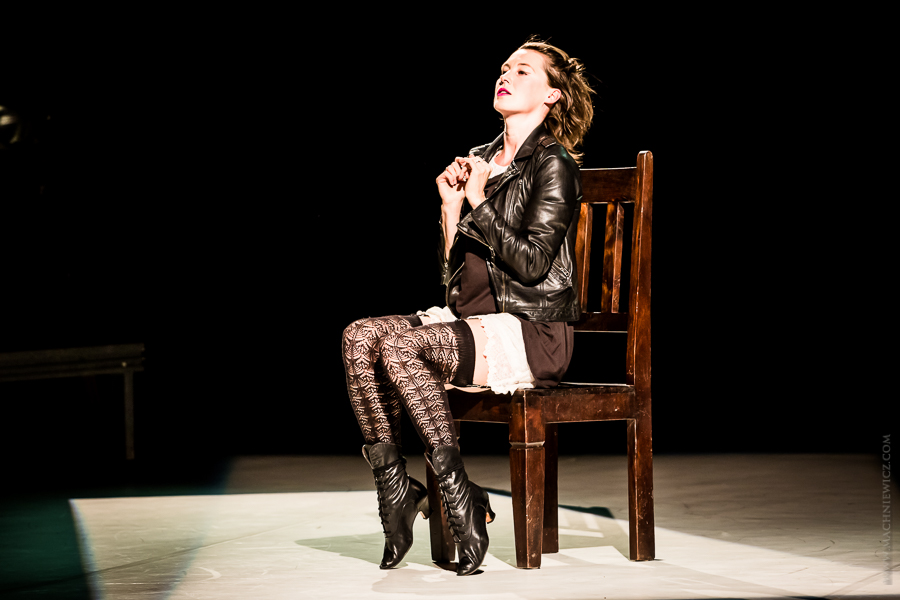
Dada von Bzdülöw “Zagraj to, czyli 17 tańców o czymś”, photo Katarzyna Machniewicz
2014, Lublin: Leaning towards the east
The programme of the Lublin edition of Platform was put together by a panel of eight experts.[1] This time, a group who valued improvisation became more prominent. Due to the nature of the dance scene in Poland, solo works were part of Platform, too, but this time dance circles worked together to make it possible for choreographers to work with larger forms.
A new section called ‘Dance map’ was introduced, with emphasis on Belarus, Ukraine, Georgia and Azerbaijan. Members of dance circles from these countries discussed the condition of their professional communities, showcasing their potential, their uniqueness, as well as the politically and culturally motivated constraints they were facing. At the time, there was no established dance platform tradition in these countries (about Belarus, for instance, see Królica 2013); the idea of introducing a model of international collaboration similar to the one in Poland was only just emerging. In addition, the Lublin Platform featured what may be described as performers’ ‘business cards’: a sort of pitching session, where a performer presented a fragment of their (still unfinished) creative process. The performative nature of this section made it wildly popular with Platform participants.
Room 40 (choreographed by Maciej Kuźmiński and performed by graduates of AST Bytom’s Dance Theatre Department) was a standout performance. Other well-received pieces included Bernhard by Paweł Sakowicz, Akty [Acts] by Aurora Lubos and Death 24 frames per second or do it to me like in a real movie. Delayed choreography in chapters, a feminist performance by Agata Siniarska. The Pink Mama Theatre ensemble (founded by Sławek Bendrat and Dominik Krawiecki, Wrocław creatives based in Switzerland) made their Platform debut with Freaks. The Pracownia Fizyczna ensemble made an entrance with their Re-akcje.
The Rite of Spring theme (explored by Janusz Orlik in an earlier edition) returned to Platform, this time in Nijinsky: The Rite of Dreams, a consummate performance by Tomasz Wygoda, choreographed by Anka Godowska / Sławek Krawczyński. A number of performers seemed to have gained the status of Platform artists-in-residence: Janusz Orlik showed Insight in collaboration with Joanna Leśnierowska; Dada von Bzdülow Theatre presented Play IT, so 17 Dances About Something; Lublin Dance Theatre performed The Stories We Never Told. Other highlights included Need Me by Andrzej Adamczak of the Polish Dance Theatre and The failure of a future by Irada Mazliah / Zbigniew Szumski.
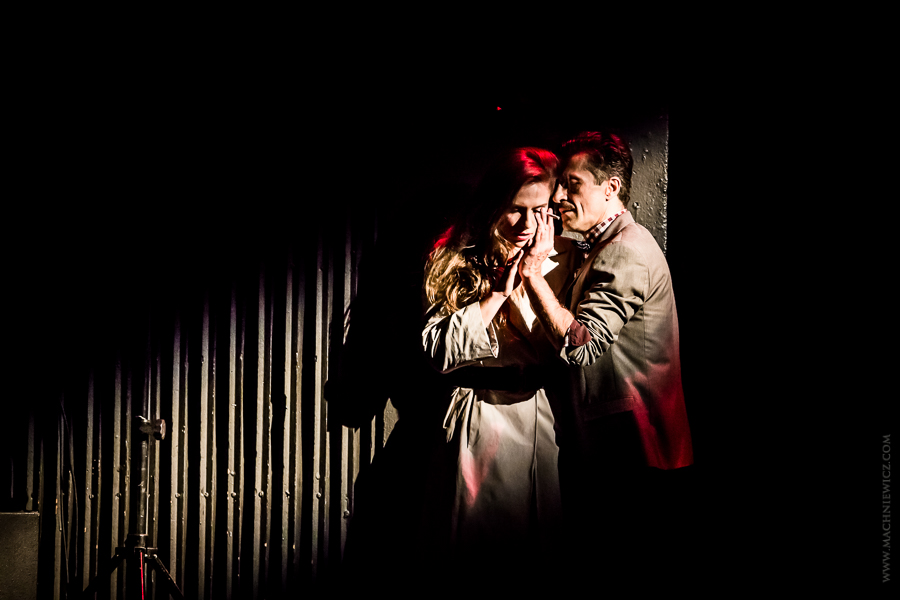
Teatr Dada von Bzdülöw “Zagraj to, czyli 17 tańców o czymś”, photo Katarzyna Machniewicz
Social issues became more prominent in this edition of Platform, with performances by Aurora Lubos and Agata Siniarska; and productions based on technique and craft, relying on structural improvisation, or improvisation in general as a work instrument (Janusz Orlik in collaboration with Joanna Leśnierowska, Tomasz Wygoda / Anka Godowska / Sławek Krawczyński and Jacek Owczarek’s Pracownia Fizyczna). Conceptual choreographies (described by the buzzword ‘prevalence of the white floor’) have practically ceased to be Platform’s trademark feature, even though this was how the dance community would describe the taste of (many) judging panels just a few years earlier. At the 2014 Platform, dance rediscovered itself as a language based on the flow of movement, fostering technique and physical fitness; or a socially engaged field, speaking out for a good cause.
Lublin was also the first (and, to date, the last) Platform where artists received awards from the Minister for Culture and National Heritage: it was an opportune moment, in that many performers came to Lublin in person and Platform had a media presence. The winners included two productions by Grażyna Kulczyk’s Art Stations Foundation:
This year’s Best Production award went to Sławomir Krawczyński, Anna Godowska and Tomasz Wygoda, creators of Nijinsky: The Rite of Dreams. In addition, Tomasz Wygoda won the award for Best Performer.
Another major award, Best Choreography, went to Insight by Janusz Orlik and Joanna Leśnierowska.
Polish Dance Platform is a major forum for Poland’s contemporary and classical dance community. It takes the form of a competition, culminating in a several-day-long overview of Polish choreography’s top productions.
[Audience – author note] voting has now been closed and it turns out that Room 40 was the audience’s favourite. The production was choreographed by Maciej Kuźmiński and performed by four dancers: soloist Daniela Komędera and Anna Kamińska, Dominika Wiak and Katarzyna Pawłowska. (Dziennik Wschodni 2014)
The idea of distributing awards during Platform did not catch on, however: it smacked of rewarding some artists twice. It was thought that being selected for Platform was in itself already a success, and to have ministerial awards on top of that made the event too reminiscent of a competition. What the team behind Platform were actually seeking to do was give art workers credit where credit was due and increase the visibility of dance circles. Still, this (now bygone) tradition of choreographers receiving awards from the Minister of Culture and National Heritage was an honourable gesture. Restoring that tradition merits consideration, particularly if the award ceremony were to be held independently of Platform.
2017, Bytom: Polemics, debate-sparking diversity
Audiences were offered twelve productions as part of the Bytom Platform. This time, the programming panel was slimmed down to five members: a modest number, compared with previous editions.[1] The nature of the 2017 Platform can be described as polemical. Not simply because the final day saw several panel discussions, earnestly touching on dance’s strategic fields and the trouble spots in its development,[2] but also because several of these panels did indeed become a testing ground for the clash of different views.
Director and theatre educator Alicja Morawska-Rubczak moderated the panel titled ‘So what’s up with dance… for kids?’. The panel included dancer and dance instructor Monika Kiwak, and performers and choreographers Ula Zerek and Alfredo Zinola. Hardly anyone had expected dance for children, of all things, to spark such a heated debate. The panel was a clash of several ideas of how to work on choreographies for a young (and the youngest) audience. Panellists reflected on the role of play, and children’s (and their parents and guardians’) participation in projects and productions. Just how extensive that participation should be was also considered. The experiences and work models of different generations clashed during this part of the panel. This debate brought to light the urgent need to examine choreography for children and young adults in greater detail, and to support its multifarious development.
Choreographer, performer and instructor Magdalena Ptasznik moderated a debate titled ‘Creating space: What’s the point of curators in dance?’. The panel comprised: Anna Królica, Joanna Leśnierowska, researcher and dramaturg Katarzyna Słoboda and curator Mateusz Szymanówka. According to dance critic Hanna Raszewska-Kursa, this was the fifth Platform’s most interesting panel:
The roles of a curator were discussed (do they represent artists or an institution? Are they a medium between the art and the audience?), as were the different strategies a curator can adopt (do they look after artists or become stars themselves?) In addition, the panel defined what a curator was not (an exporter, an agent or a salesperson); and discussed artists who are often compelled by the market to become curators, organizers and directors, at times to the detriment of their creative work. (Raszewska-Kursa 2017)
Performer and choreographer Paulina Święcańska, and artist and festival director Agata Życzkowska, invited director and dance script author Włodzimierz Kaczkowski, Anna Królica, Maciej Kuźmiński and Maria Stokłosa to join them on a panel titled ‘The Role of Poland’s dance centres in supporting the work of contemporary dance artists and critics’. A similar theme recurred during a panel convened by Jadwiga Majewska, titled ‘National Dance Centres: The project, what we need and what lies ahead’. That panel comprised Anna Godowska, Ryszard Kalinowski, Joanna Leśnierowska and Grzegorz Pańtak.
The polemical nature of the Bytom Platform did not extend solely to panellists presenting their divergent views and approaches: it was also evident in the programme itself ,which comprised twelve productions and sparked many a debate and emotional response. This is a musical by Karol Tymiński was perhaps the most ‘controversial’ show: a radical piece which used nudity and offered an uncompromising view of the body as both an instrument of movement and a sound archive. Some of the other productions were similarly experimental (though the scope of that experimentation varied): The Ninth by Via Negativa / Anita Wach; Zrób siebie [Make yourself] by Marta Ziółek; noish ~ by Maria Zimpel; and Balet Koparyczny [Excavator Ballet] by Iza Szostak / Paweł Sakowicz.
Witajcie / Welcome, an éngagé piece by Aurora Lubos, provoked a similarly emotional response. It was steeped in the context of the refugee crisis and addressed the situation in transit camps. Anna Godowska and Sławek Krawczyński came up with some unforgettable images, an inimitable mood (and, most of all, some unforgettable movement, dance and improvisation) in their piece Bataille i świt nowych dni [Bataille and the Dawn of New Days]. The other pieces in the Platform programme were: Poza horyzont [Beyond the Horizon] by Kielce Dance Theatre / Jacek Przybyłowicz and Stalking Paradise by Lublin Dance Theatre. This diverse picture of Polish dance was complemented by small form works, no less focused on movement, flow, working with the body, form and context than their full-scale counterparts. These small-scale productions were: Śmierć. Ćwiczenia i wariacje [Death: Exercises and variations] by Renata Piotrowska-Auffret; Total by Paweł Sakowicz and Why don’t you like sadness by Katarzyna Chmielewska.
Outside of the main programme, Platform featured an accompanying event whose goal was to promote local colour, and local artists and ensembles.
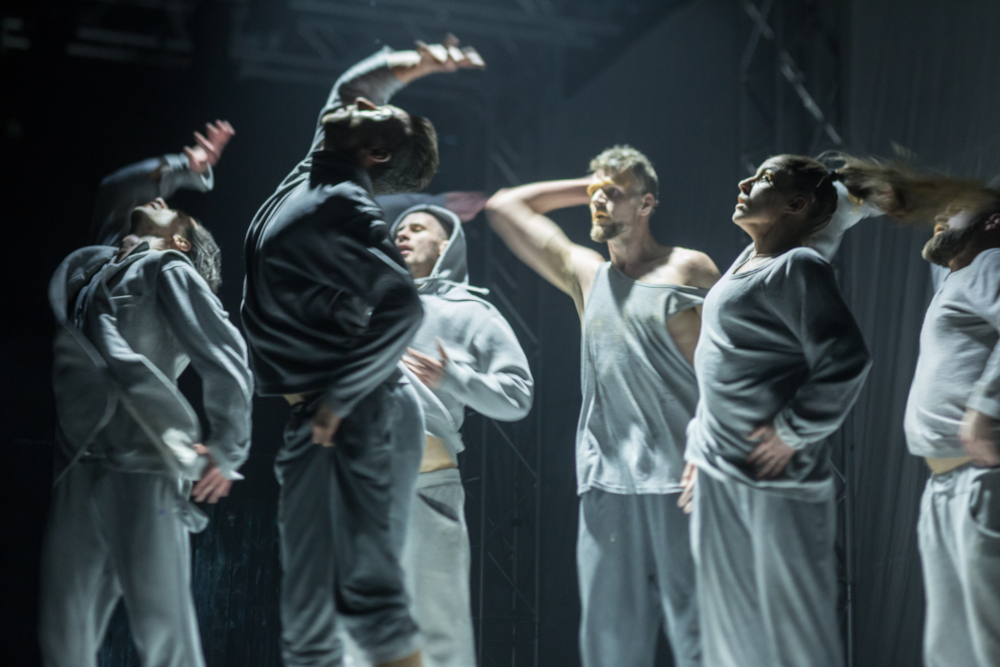
Teatr Rozbark, “Zagubieni w skórze”, photo Jakub Wittchen
2019, Gdańsk: Big and little Platform side by side
Following the heated debate on dance for young adults during the Bytom Platform, organizing a children-specific ‘little’ Platform turned out to be a good way forward: light was shed on the rapidly growing section of choreography intended for the youngest (known in Polish dance circles as ‘najnaje’: ‘thethe’ youngest) and young adult audiences. The introduction of this new, ‘little’ Platform made the presentation of the following pieces possible: Blisko [Close] by Alicja Morawska-Rubczak; Pan Kejk by Olsztyn Dance Theatre; and on_line by Holobiont Collective.
Bytom caught a particular vibe from dance circles: children’s and young adult choreography seemed to be teeming with fresh energy; this prompted the question of whether we were witnessing a larger shift, the emergence of a different choreographic model of working with children and for children. Without a doubt, a new group of (female) choreographers asserted itself, focusing primarily on dance for young (and the youngest) audiences; the Contakids method[1] became more widespread in Poland (owing in no small part to performance artist Anna Wańtuch); and, on top of all that, the social model of parenting / caring for children was being transformed.
[1] The Contakids method was created by Israeli dancer and choreographer Itay Yatuv, who drew on his experience as a dancer and contact improvisation instructor (and the experience of playing with his own children). Contakids classes are particularly suitable for children aged between two and five, and are meant for both children and their parents. Through physical contact, working with movement and their bodies, parents and children develop a new form of communication which is enjoyable to both parties. Children improve their motor skills and self-confidence, while parents become more trusting in their children and in themselves. Certified Contakids method instructors are currently working in a number of countries, including Poland (Anna Wańtuch, among others).
For several years now, Polish dance has gradually been reclaiming the art field of choreography for children. Small as this dance sector still is, artists have managed to gain prominence and attract audience interest; they have succeeded, too, in identifying the threats that working in this field entails, and in putting a finger on how it differs from choreography in general and what lies ahead for children’s choreographers. Many choreographers describe this field as their own.
Once again, a panel of experts got to work on the Platform programme. This time, the group of ten comprised mainly artists, while, on previous occasions, curators tended to dominate the panel.
The artists invited to take part in the main programme had one thing in common: they were ‘single atoms’ working mostly abroad; in other words, members of the Polish dance community scattered across the globe. Take, for example, flow by Compagnie Linga / Katarzyna Gdaniec and Marco Cantalupo, choreographed by Katarzyna Gdaniec. Her work is indeed a part of the Polish school of (choreographic) thought. Gdaniec has been a frequent guest at festivals in Lublin and Gdańsk, but her ensemble is based in Italy. Dariusz Nowak (working with Dor Mamalia on into me, see) and Hygin Delimat (Slowstopper: On the Edge of Survival) are members of the same group.
Wojciech Grudziński presented his Populuxe during the Gdańsk Platform. With Jumpcore, Paweł Sakowicz reaffirmed his interest in virtuosity and conceptual ideas. Paweł Grala presented his Matrix (Clearance); up until that point, Grala had appeared at Platform as a dancer-performer. This time, he showcased his choreographic streak. Rozkosz [Pleasure ], a large-cast ROZBARK Theatre production, choreographed by Jakub Lewandowski, attracted a lot of attention and sparked much debate.
The main programme saw the return of Platform ‘veterans’, regulars: Iwona Olszowska (Ewa and He), Małgorzata Haduch (this time in collaboration with Paulina Owczarek – KIO in Motion), Janusz Orlik (Mute) and Anna Nowicka (This is the Real Thing). However, Dada von Bzdülow Theatre and Sopot Dance Theatre were absent. The Gdańsk, Sopot and Gdynia dance circles were represented by Amareya Theatre, in an interesting collaboration: renamed A PART Theatre, and teamed up with Marcin Herich, Amareya presented Cztery [Four]. The absence of these two major ensembles was not an oversight on the part of the selection panel, but evidence of change as the ensembles in question decided to either shut up shop or regroup. The Gdańsk Platform was organized by the Polka dot Foundation, an emerging institution with ever-growing potential and agency.
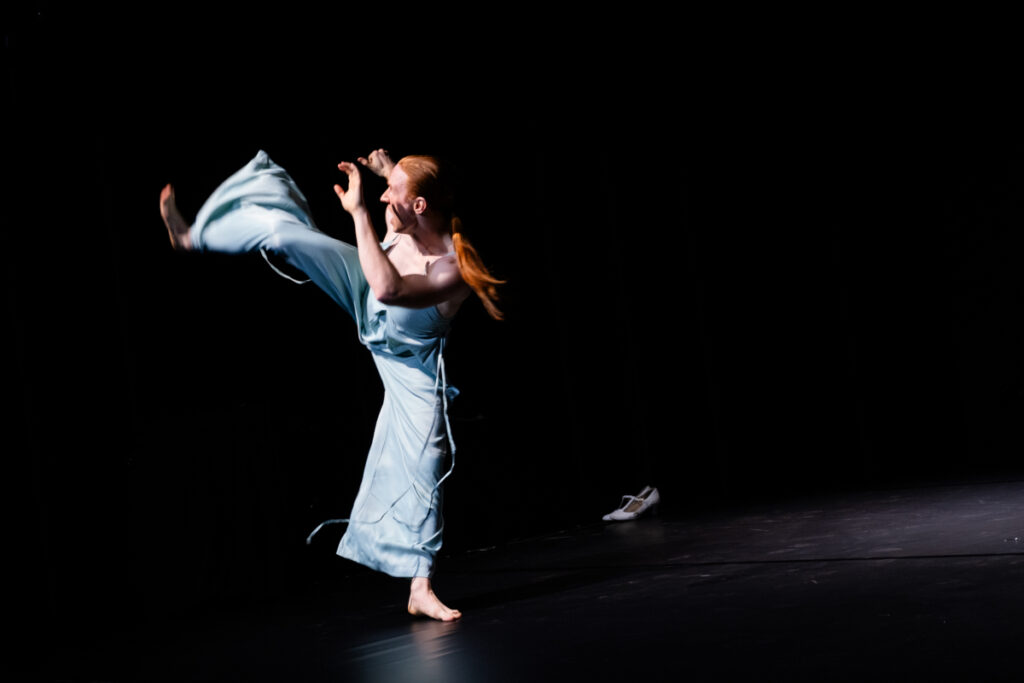
Dominik Więcek “Cafe Muller”, photo Marta Ankiersztejn
2024, Łódź
The last Platform to date was held in Łódź. Its programme was put together by a panel of ten experts, who focused on striking a balance between large-cast productions and solo works, and sought to include productions sensitive to social contexts. Dominik Więcek’s spontaneous intervention reminded Platform participants how important work ethics is for freelancers: observing standards, transparent arrangements and signing contracts before one starts work on a project (which would seem obvious, but is not always a given), all for the sake of peace of mind during the collaborative process.
Glancing at the Platform programme, one notices a gradual generational shift (for want of a less pompous term). In 2023, Sopot Dance Theatre (Joanna Czajkowska and Jacek Krawczyk) announced the closure of their dance company; Dada von Bzdülow made their quiet exit even earlier, although the artists who made up the group are still performing and collaborate with others; nonetheless, a major organizational shift has occurred. In my view, the dissolution of such companies is a clear signal of a change in how often artists perform and how involved in life on stage they are willing to be. This entails some members of an ensemble (and sometimes an entire ensemble) permanently stepping off the stage. In 2024, the premature death of Sławek Krawczyński put an end to the work of the Anna Godowska / Sławek Krawczyński duo.
The Łódź Platform certainly reasserted the popularity of AST Bytom’s Dance Theatre Department graduates, (already evident when Room 40 was shown during the Lublin Platform in 2014, and when Pleasure, choreographed by Jakub Lewandowski, was presented in Gdańsk). Daniela Komędera, Dominika Wiak, Monika Witkowska and Dominik Więcek are among the graduates; together, they comprise the informal STICKY FINGERS CLUB. Bytom graduates are also active as independent performers: suffice it to mention Café Müller by Dominik Więcek and MISSPIECE by Dominika Wiak.
They appear on stage as individual performers, while engaging in a range of collaborations: for instance, for Valesce, Valesce, Valesce, Valesce they partnered with Performa Foundation and choreographer Dominika Knapik. During the Łódź Platform, Bytom graduates were involved in a number of productions and had a prominent presence. Their sense of humour, use of the flow of movement, their embodied presence, drawing inspiration from current events – all of this brings about a new quality, a new language. Both the audience and experts think highly of this breath of fresh expression.
When putting the Platform programme together, the panel emphasized diversity. The Łódź edition saw the return of socially engaged, often experimental productions, such as Złe ziele [Bad seed] by Magda Jędra, Części ciała [Body parts] by Ramona Nagabczyńska and Every Minute Motherland by Maciej Kuźmiński. Each of these productions touches on different issues and becomes a dance intervention: ecological, feminist, political with a pacifist slant.
The programme included productions by the younger generation of the dance scene: Lagma by Dana Chmielewska (featuring Alicja Czyczel, Marta Szypulska and Aleksandra Gryka) and Connected / Disconnected by Aleksander Gorzkiewicz. The eighth Platform’s opening production was Odyseja [The Odyssey] by Tomasz Ciesielski and Newer Theatre, a site-specific piece set in a train station.
Janusz Orlik represented the ‘distinguished (old) guard’ with his Third Symphony. Throughout Platform’s history, he has been its most constant presence. Most panels clearly valued the diversity of his work, based variously on small conceptual forms, technical precision, improvisation or exploring a production’s musical qualities. Lublin Dance Theatre also made a return to Platform with their In my beginning is my end, as did Agata Życzkowska (who made a name for herself at Hoteloko Company) and who presented her performance of Luxa (in collaboration with Karina Szutko.)
By that point, organizing the ‘little Platform’ had become a tradition; this time, that section of Platform was dominated by choreographers from Poznań and the organizations they worked with, including Kolekttacz and Holobiont Collective. Watching Frajda, Granda, Bzik transported one to their childhood, or reminded one of the traces evolution has left in our body in the form of the coccyx: the theme of My Tail and I, a production for the youngest audiences and their parents.
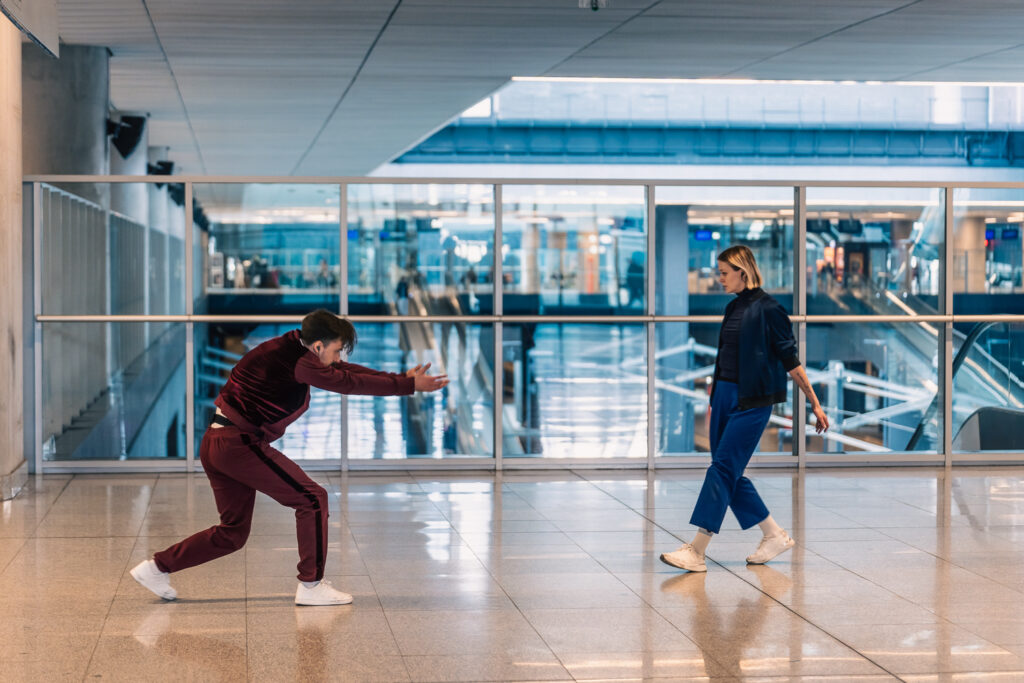
Tomasz Ciesielski i Teatr Nowszy “Odyseja”, photo Mariusz Marciniak
Polish Dance Platform as the witness to change
Each edition of Polish Dance Platform has become a witness to the changes occurring on the Polish dance scene between 2003 and 2026. These changes take the form of both subtle shifts and major transformations concerning infrastructure, new programmes and trends. Platform is alert primarily to the changes in aesthetics, but it unwittingly bears witness to political changes, to the influx of new performers, generational shifts, to both the expansion and contraction of Polish dance circles, etc. Similarly, one cannot help but watch certain genres and trends in dance become obsolete.
Since 2003, Polish dance has been undergoing a genuine ‘Copernican revolution’: the growing role of institutionalization brought about a radical change in the circumstances in which dancers worked; dancers have been given the opportunity to train in Poland; NGOs, too, have made a major and significant contribution to the changes. Globalization has played a major (and very positive) role: following Poland’s EU accession in 2004, the fruits of globalization became easier to consume. Access to training abroad (both at art universities and during informal workshop training), work in theatres and ensembles, travelling between various European job markets, foreign exchanges and collaborations – all these opportunities are there for the taking for the dance community, and they, too, have shaped that community. They have influenced the form of the productions, and the preferred techniques and aesthetics. At the same time, new institutions and programmes have emerged in Poland, with the aim of supporting both dance professionals and the art of choreography itself. Let us, however, take another look at the aesthetics of individual Platform editions and their unique nature.
I would describe the Warsaw Platform of 2003 as an overture, identifying the direction in which dance circles would develop, their goals, and the idea that their thinking about dance should be large-scale despite the grassroots nature of their work. At the time, the dance community used their own resourcefulness to create something extraordinary, which is germinating and bearing fruit till this day. At the same time, the fact that this was a grassroots initiative laid bare the absence of systemic solutions and emphasized dancers’ determination. This reconnaissance in the field called dance has eventually led to the bridging of (some) gaps.
In my view, Poznań (2008), Bytom (2014) and Gdańsk (2019) can be described as breakthrough editions of Platform: they brought with them new ideas and inaugurated the process of renewal of dance circles.
A clear hierarchical structure (mirroring the relationship between master and disciple, transmitted through large ‘mother ensembles’ which, apart from presenting a certain repertoire, trained dancers and did other educational work) used to be very prominent during the initial years of Platform, but is mostly obsolete today (and has certainly become marginal). As time went by, it became evident this tradition was not the only training path available. Artists who trained abroad began to apply to Platform: having sensed new creative energy in Poland, they are slowly returning home or attempting to divide their time between home and abroad. In Polish universities and art schools, there is a clear tendency to establish, and expand, training courses for dance practitioners. The portfolio of such courses has widened not only in foreign schools, but also in Bytom, Łódź, Poznań, Katowice and Warsaw.
Unfurling the peacock’s tail
Polish Dance Platform is also a narrative of how working conditions for artists are systemically created, in Poland and abroad. Seen from this angle, the history of Platform is a heartwarming one, in that it clearly maps progress: there was a time when artists only had themselves to fall back on; whereas today we are reaching a point where there are tools, strategies, systemic solutions and institutions whose job it is to organize Platform and promote dance. But Platform is, above all, a survey of the tendencies and aesthetics embraced by artists who have worked in Poland in recent years; and the emerging picture is a colourful and diverse one. Apart from dance theatres, conceptual dance, pure dance and structural improvisation, we have seen the emergence of identity performances, socially engaged productions and post-dramatic forms. And thus the Platform tradition develops, coming up with ever new perspectives in how dance is conceptualized and programmed.
Translated by Joanna Przasnyska-Błachnio
BIBLIOGRAFIA
- Dziennik Wschodni, ‘Polska Platforma Tańca. Werdykt’, 10 November 2014. Accessed 12 April 2026. https://encyklopediateatru.pl/artykuly/192087/lublin-najlepsi-na-polskiej-platformie-tanca.
- Harakiri Farmers, ‘About’. Accessed 8 June 2026, http://harakirifarmers.com/pl/o-nas/harakiri-farmers/.
- Hoczyk, J., ‘Polska Platforma Tańca’. In Słownik tańca współczesnego, M. Leyko, J. Szymajda, T. Ciesielski (eds.). Łódź: Łódź University Press, 2022, pp. 491–492.
- Kowalczyk, J. R., ‘Podsumowanie roku 2009 w teatrze – Kobiety, kino i gniew’. Culture. pl, 27 January 2010. Accessed 8 May 2026. https://culture.pl/pl/artykul/podsumowanie-roku-2009-w-teatrze-kobiety-kino-i-gniew.
- Królica, A., ‘A Few Remarks About Polish Dance’. In Polska Platforma Tańca / Polish Dance Platform. Poznań, Poland, 9–11 October 2008, catalogue. Poznań, 2008, p. 8.
- Królica, A., Pokolenie solo. Choreografowie w rozmowach z Anną Królicą. Kraków: Cricoteka, 2013.
- Królica, A., ‘The Polish Periphery in “Native” Europe: Towards the Institutionalization of Dance’. In European Dance since 1989: Communitas and the Other, J. Szymajda (ed.). Warsaw: Institute of Music and Dance; Abingdon: Routledge, 2014, pp. 23–36.
- Królica, A., ‘Taniec.pl, or Choreography as an Export Product’. In Sztuka do odkrycia. Szkice o polskim tańcu, J. Szymajda (ed.). Tarnów: Mościce Culture Centre, 2011, pp. 97–103.
- Majewska, J., ‘jak nas piszą, tak nas tańczą’. Didaskalia, no. 91 (2009). Accessed 8 May 2026. https://archiwum.didaskalia.pl/91_majewska.htm.
- Majewska, J. (ed.). My, Taniec. Antologia polskiej krytyki tańca po 1989 roku. Tarnów: Mościce Arts Centre, 2013.
- Majewska, J., ‘Taniec po polsku?’. Teatr, no. 4 (2013). Accessed 22 March 2026. https://archiwum.teatr-pismo.pl/4453-taniec-po-polsku/.
- Mrozek, W., ‘Polskie sample i skrecze – jeszcze o Happy’. NowyTaniec.pl, 27 April 2009, reprint. Accessed 12 April 2024. https://encyklopediateatru.pl/artykuly/71721/polskie-sample-i-skrecze-jeszcze-o-happy.
- Obarska, M., ‘Sławomir Krawczyński’. Culture.pl, 9 May 2024. Accessed 12 April 2026. https://culture.pl/pl/tworca/slawomir-krawczynski.
- Polska Platforma Tańca / Polish Dance Platform. Poznań, Poland, 9–11 October 2008, catalogue. Poznań, 2008.
- Polska Platforma Tańca / Polish Dance Platform. Poznań, Poland, 6–9 December 2012, catalogue. Poznań, 2012.
- Raszewska-Kursa, H., ‘Polska Platforma Tańca 2017 – kopalnia tańca i choreografii’. Teatralny.pl, 28 April 2017. Accessed 20 March 2026. https://www.teatralny.pl/artykuly/polska-platforma-tanca-2017-kopalnia-tanca-i-choreografii-1955.